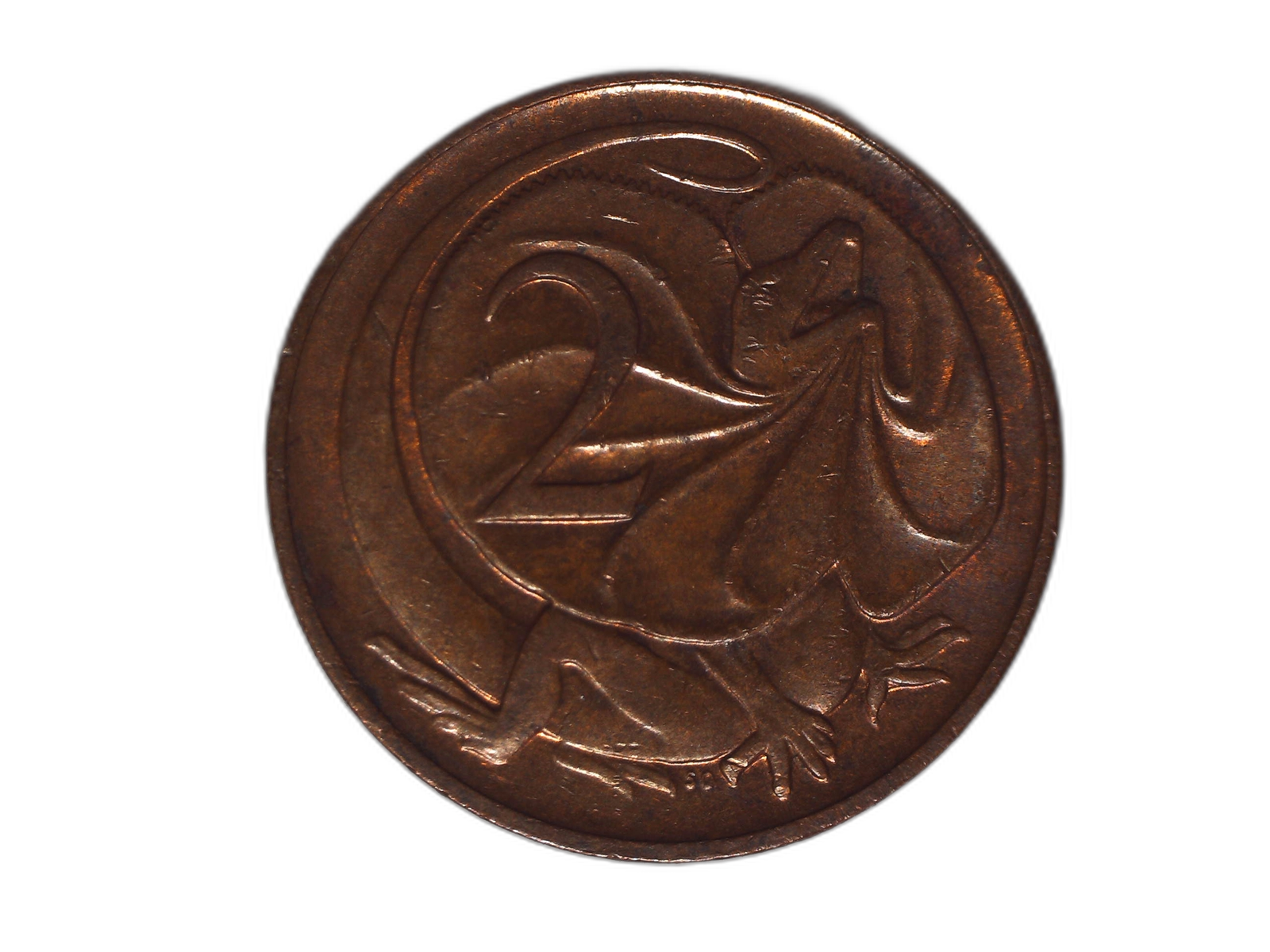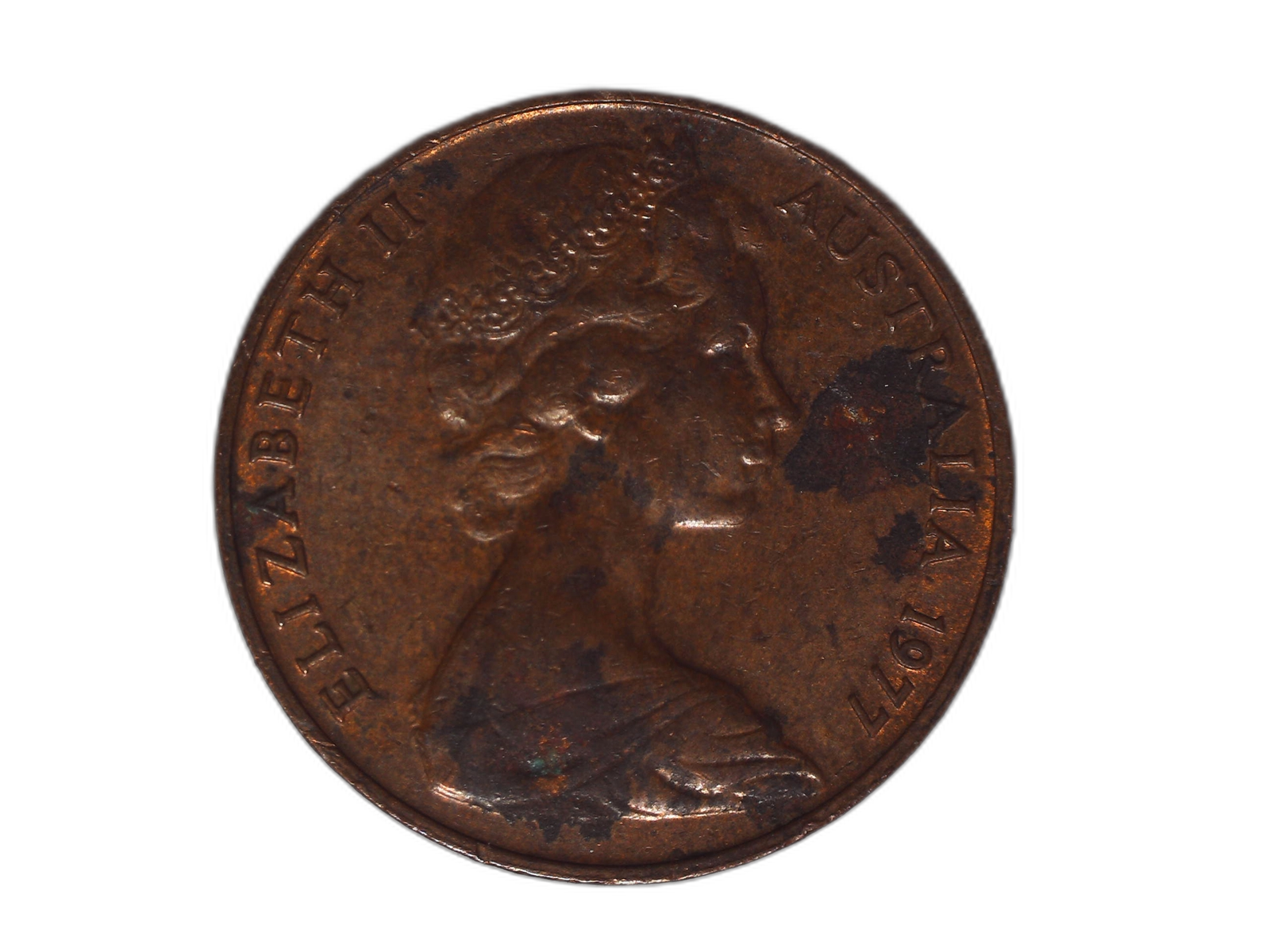
TWO CENT
Circulating coins are the coins Australians use everyday. They are mass-produced coins and made from base metals such as copper, nickel and aluminium, struck at the rate of up to 650 per minute.
While they ordinarily feature reverse designs of Australian fauna (or an Aboriginal elder on the two dollar coin), many commemorative coins are released to mark events, people or organisations which have had a significant impact on Australian society.
The two cent coin was first introduced with decimal currency on 14 February 1966. The original reverse design of the frill-necked lizard has not been changed since the introduction.
Two cent coins were produced by the Royal Australian Mint, the Royal Mint Melbourne branch, the Royal Mint Perth branch, and the Royal Mint, Llantrisant. The two cent coin was the last circulating coin for Australia struck outside the Royal Australian Mint.
The cessation of issue of one and two cent coins was announced by the Treasurer in his Budget Speech of 21 August 1990. The decision was based on the loss of real purchasing power through inflation and the cost of minting of these coins. The accompanying Press Release noted that
"…1c and 2c coins will continue to be legal tender: they can still be used to purchase goods and can be deposited with financial institutions in the normal manner."
Both coins were withdrawn from circulation commencing in February 1992.
Australia, Cent, Dollar, Coin, Banknote, Two
==============================================================================================
FIVE CENT
Circulating coins are the coins Australians use everyday. They are mass-produced coins and made from base metals such as copper, nickel and aluminium, struck at the rate of up to 650 per minute.
While they ordinarily feature reverse designs of Australian fauna (or an Aboriginal elder on the two dollar coin), many commemorative coins are released to mark events, people or organisations which have had a significant impact on Australian society.
The five cent coin was first introduced with decimal currency on 14 February 1966. The original reverse design of the echidna on standard circulating coins has not been changed since the introduction.
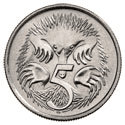
The obverse design was altered in 2016 to mark the 50th anniversary of decimal currency, but the reverse design of the echidna has remained constant.
All of the first issue of five cent coins in 1966 were produced at the Royal Mint, London. Since the first production from London, five cent coins have been produced by the Royal Australian Mint, the Royal Mint, Llantrisant and the Royal Canadian Mint.

We write rarely, but only the best content.